The Key Differences Between Helical’s Tool Coatings
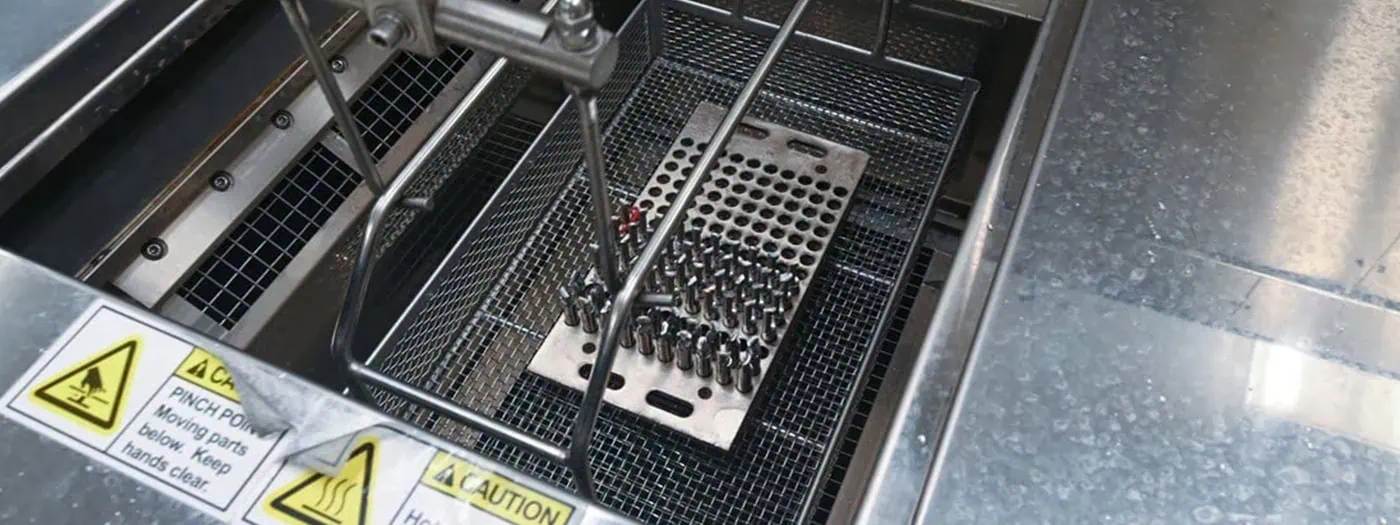
Tool coatings are added to protect against the forces that wear down cutting tools. They play a critical role in CNC machining by reducing heat generation and friction while enhancing overall tool performance. Below is an overview of Helical Solutions’ coating options, including which tool families they pair with, the applications they’re best suited for, and helpful application tips.
Helical Solutions demonstrates its commitment to performance by delivering high-performance carbide end mills and tools designed to reduce cycle times, improve part finishes, and extend tool life. This is achieved through a focus on exceptional quality and innovation, utilizing precision CNC manufacturing, advanced design techniques, and a world-class team of engineers and technical experts. Helical Solutions aims to be a true superior product performance, and responsive technical support.
The following information will help machinists understand the differences between Helical’s coating options and how to select the right one based on material and application.
What Are Tool Coatings and Why Are They Important?
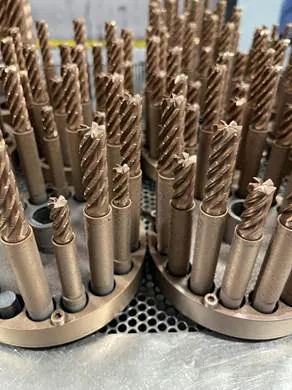
Tool coatings are applied to a tool’s cutting surface through a process called PVD (Physical Vapor Deposition). PVD and CVD are two different types of coating applications, with PVD being the common process for Helical’s tools.
This near-vacuum process distributes micron-thick layers evenly onto a properly prepared tool, helping it maintain a sharper cutting edge. When selecting tool coatings, machinists should consider material type, coolant use, and how the
material and operation may affect the cutting edges. Understanding these factors is essential to extending tool life.
Some key benefits of coatings include improved thermal resistance, better chip evacuation, increased lubricity (which allows chips to slide more easily down the flute), and higher microhardness. These properties reduce tool wear, enhance performance in material-specific applications, and extend tool life during production runs.
Helical’s coating lineup is designed with specific materials and applications in mind. Selecting the right coating for your job can have a major impact on tool life, heat control, and overall performance.
How to Choose the Right Coating:
Choosing the proper coating for your application is crucial, as each Helical coating is optimized for specific materials. Consider the following when selecting:
– What material are you machining?
– Will the material work harden quickly under heat?
– What is its coefficient of friction?
– Will you be using coolant?
– What is your expected tool life for this production run?
Application Tips:
Coatings in Coolant Applications:
Most coatings perform better with coolant, but there are exceptions.
Tplus performs well in many materials, but when cutting hardened steels, the combination of high heat and coolant can cause thermal shock, resulting in tool fractures.
In composites and non-metallic materials—often machined with Dplus—using coolant can create a slurry and increase wear between the tool and workpiece. For these materials, dry machining is generally preferred.
Zplus vs. Nplus vs. Dplus


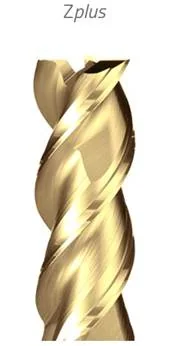
For aluminum and non-ferrous applications, coatings are found on Helical’s HVAL and HMAF tool families.
– Zplus is Helical’s longstanding coating for aluminum and non-ferrous materials.
– Nplus improves tool life compared to Zplus and features a harder, smoother coating—ideal for larger production jobs in tougher materials.
– Dplus is a tetrahedral amorphous carbon coating known for extreme wear resistance and performance in abrasive materials. For shops seeking a DLC-style coating, Dplus is Helical’s recommendation.
Uncoated (or bright) tools can be used in aluminum applications, but adding a coating generally improves productivity and helps prevent material from welding onto the tool.
Aplus vs. Tplus
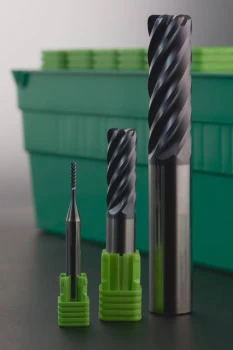
– Aplus is a tough, multi-layer coating that enhances adhesion, edge retention, and heat resistance. It performs best in steels under 45 Rc. Helical’s HSV, HEV, and HSF tool families are excellent choices with this coating. Aplus is not recommended for aluminum, as it can cause galling (when material adheres to the tool), negatively impacting cutting performance and chip evacuation.
– Tplus is a premium coating offering top-tier performance in ferrous materials. It has a slight edge over Aplus, particularly in stainless steels and nickel alloys, and is optimal for cutting materials between 45 Rc and 65 Rc. It supports higher temperatures, maintains edge retention, and reduces wear. However, due to its hardness, it may generate more heat—and, as mentioned earlier, coolant can sometimes lead to thermal shock in these conditions.
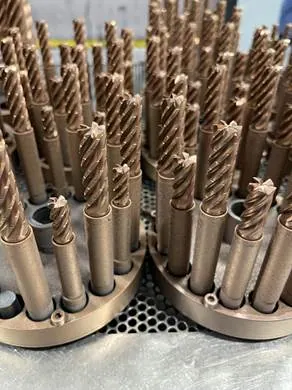
Tplus has also shown success in titanium applications. Both Aplus and Tplus are suitable choices for these materials. You can find Tplus coatings on Helical’s HSV, HEV, and HVSS-6 tool families. The HVSS-6 line, in particular, has proven optimal for cutting 316 stainless steels.
There are no setup differences between these coatings when programming your machine. Speeds and feeds depend on the specific toolpath and family used, though coatings generally allow for higher cutting speeds. Choosing the correct coating for your material results in longer tool life and more efficient production.
Tool Storage Recommendations

For best results, Helical recommends storing tools in individual padded tubes rather than in shared bins. This prevents damage to flutes, cutting edges, and coatings. A clean, dry environment helps maintain tool quality and ensures consistent performance over time.
Conclusion
Tool coatings are essential for optimizing performance based on the material being machined. Helical’s coatings are engineered, tested, and proven to deliver the best results across specific materials and applications. By pairing the right tool family and coating, machinists can improve machining efficiency, enhance part quality, and extend tool life.
For more insights on cutting tool coatings, watch this episode of In the Loupe TV: Cutting Tool Coatings.
If you have additional questions about coatings or specific applications, contact Helical’s technical team for guidance at 1-866-543-5422 or by email. Helical’s experts are ready to help you find the ideal tool and coating combination for your needs.

Michaela Martell is a three year employee serving as an Engineering Associate for Harvey Performance Company. Michaela has capabilities of assisting customers across multiple brands within the company, excelling in customer service to which she has 25+ years experience in. Michaela attended the University of Southern Maine as an Art Education Major with a focus in Journalism as well. She has honed skills in computer applications, web development, photography, and has a few written publications as an author.
Leave a Reply
Want to join the discussion?Feel free to contribute!